Ashleigh Vos
Hello! I'm Ashleigh Vos, a South African living on the other side of the world. Born and raised among the beautiful ecosystems in South Africa, I developed an appreciation of wildlife, ecology, diversity (in both nature and people!), and sustainability. Today I’m passionate about a range of sustainability topics, particularly corporate sustainability, wildlife conservation, sustainability reporting, natural resources management, and systems thinking.
Shortly after the big move to Canada, I studied Biology at Western University in Ontario. Here my love for scientific research and crunching data began to flourish. My undergraduate thesis centered around a marine biodiversity survey of the Maiden Islands (Northern Ireland) using Baited Remote Underwater Video (BRUVs). My results provided valuable insights into the species and their relative abundance in that area, leading to better informed regulations for the Marine Protected Areas (MPAs). As I worked through this thesis, I discovered a latent passion for playing with numbers and analyzing data. Together with the fulfilling feeling of contributing to a better future, I had found my happy place.
Following these studies, I embarked on a Master's degree in Environment and Sustainability at Western University, to gain a more holistic and interdisciplinary idea of how to tackle today’s conservation and sustainability issues. Following an introduction to GIS during this time, I fell in love with its ability to share spatial data in appealing ways.
My journey to date has unlocked a love for learning new skills and pushing myself out of my comfort zone. Fortunately, I'm a resilient and a fast learner!
Resume
Click here to view my resume.
Here you can see some of the data analyses I have performed and how I’ve presented them using either R and R-Studio, QGIS, ArcGIS, or ArcGIS online.
QGIS
I recently completed a research project diving into the effects that a policy change had on the health of aquatic ecosystems. Using open data, I explored how the 2013 change in the Canadian Fisheries Act, a move that stopped protecting the habitats of species unless they supported a fishery, impacted freshwater and marine ecosystems. Below are examples of the results.
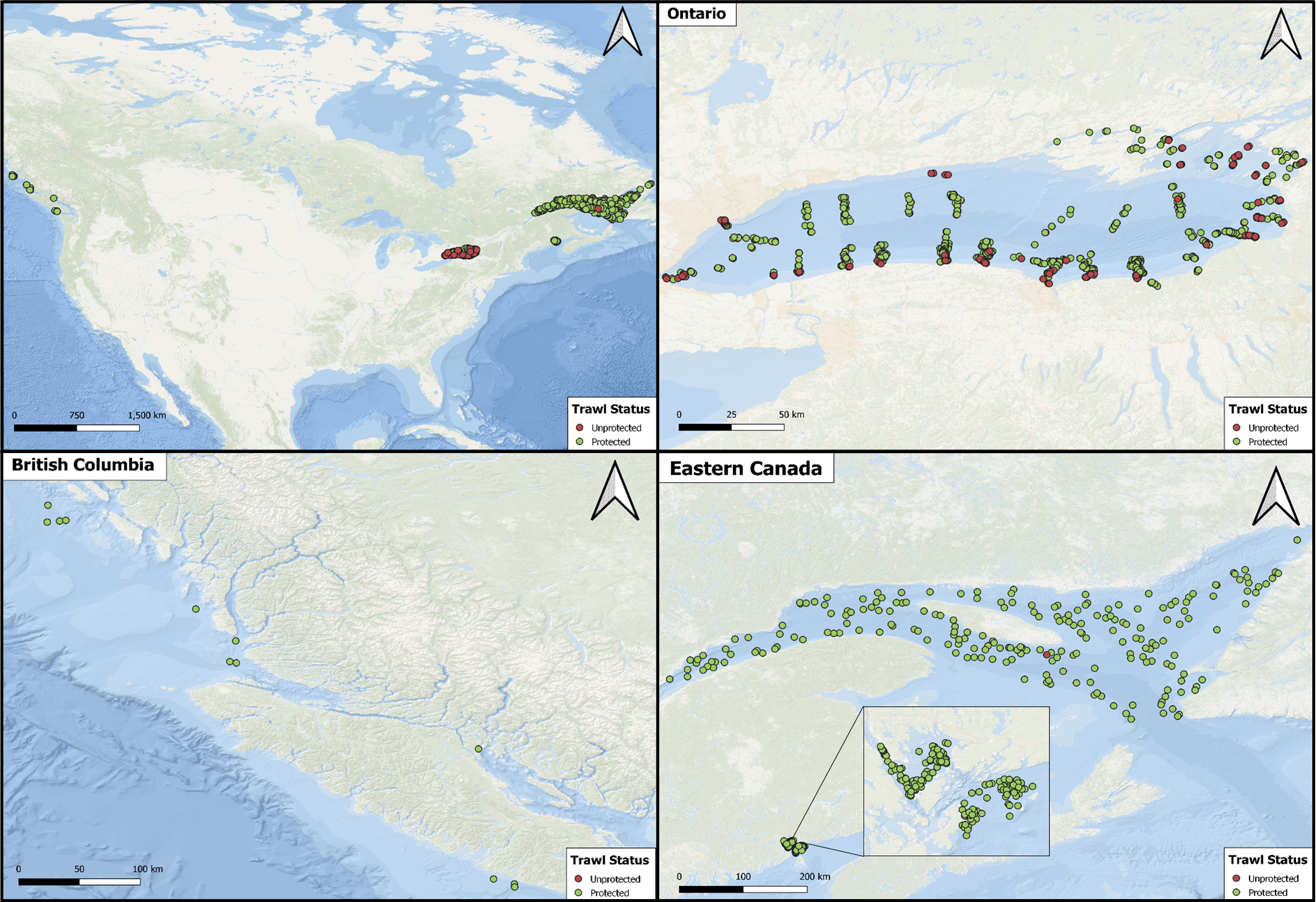
A map showing which areas (represented by trawls) are protected under the 2013 Fisheries Act, determined by whether there was at least one protected species present in each trawl:
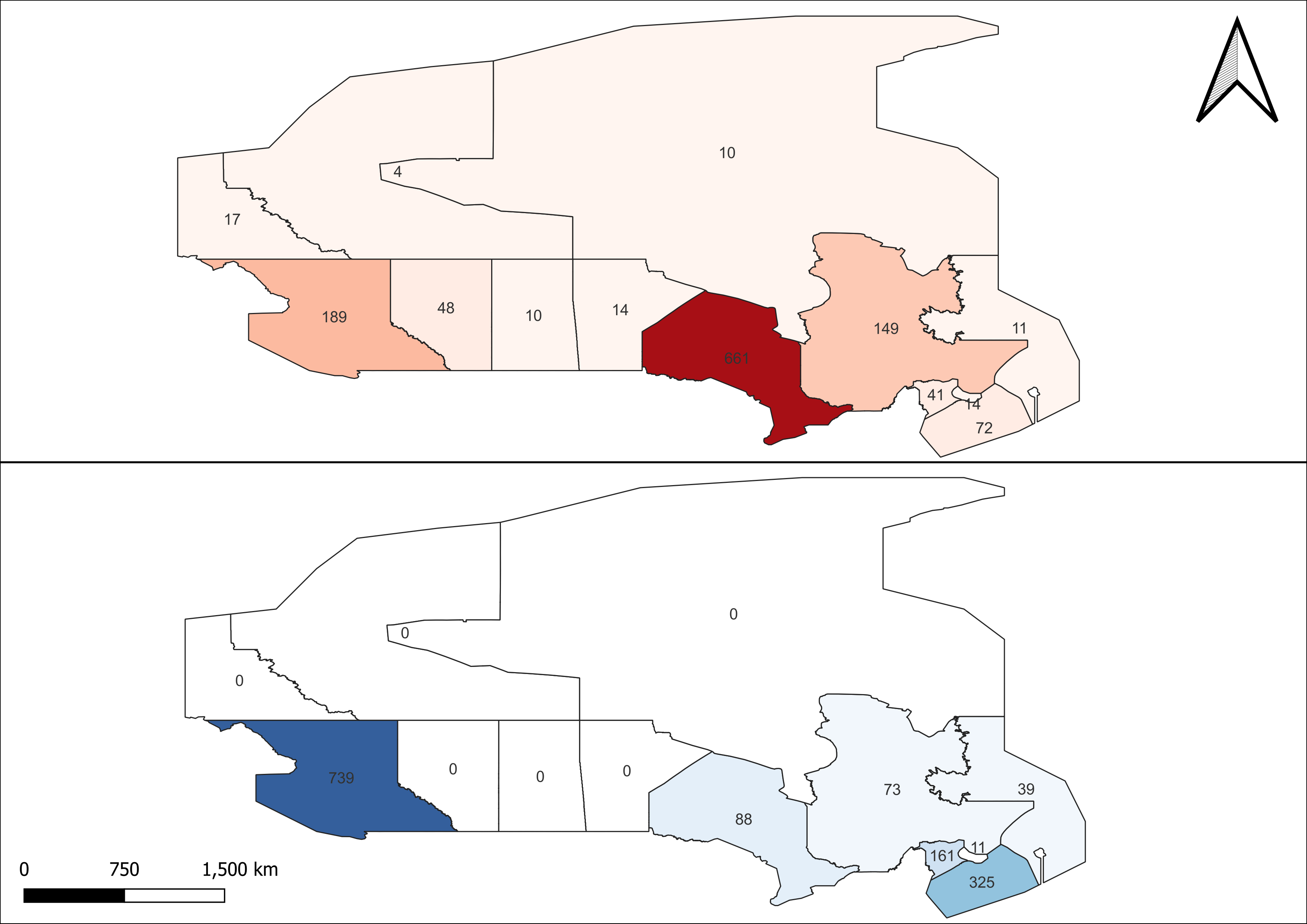
A comparison map showing the number of Impact Assessments conducted that affect fish and fish habitat (top), and the overall species richness (used as a proxy for biodiversity – (bottom)), across the provinces of Canada:
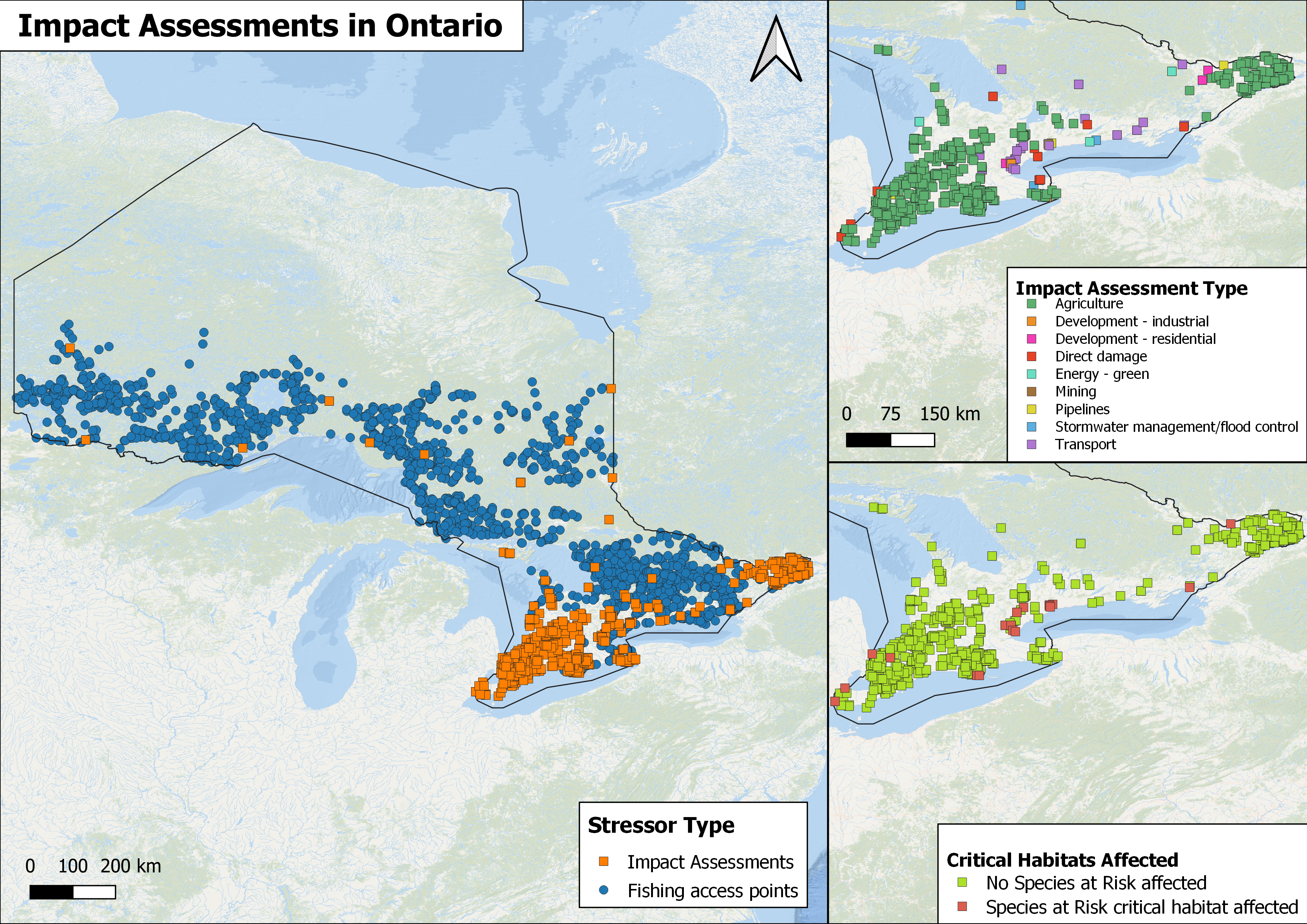
The leftmost image shows the locations of two possible stressors in Ontario, Impact Assessments that affect fish and fish habitat; and fishing access points. The Impact Assessments are then categorized by their type (top right), and whether they impact the critical habitats of Species at Risk (bottom right):
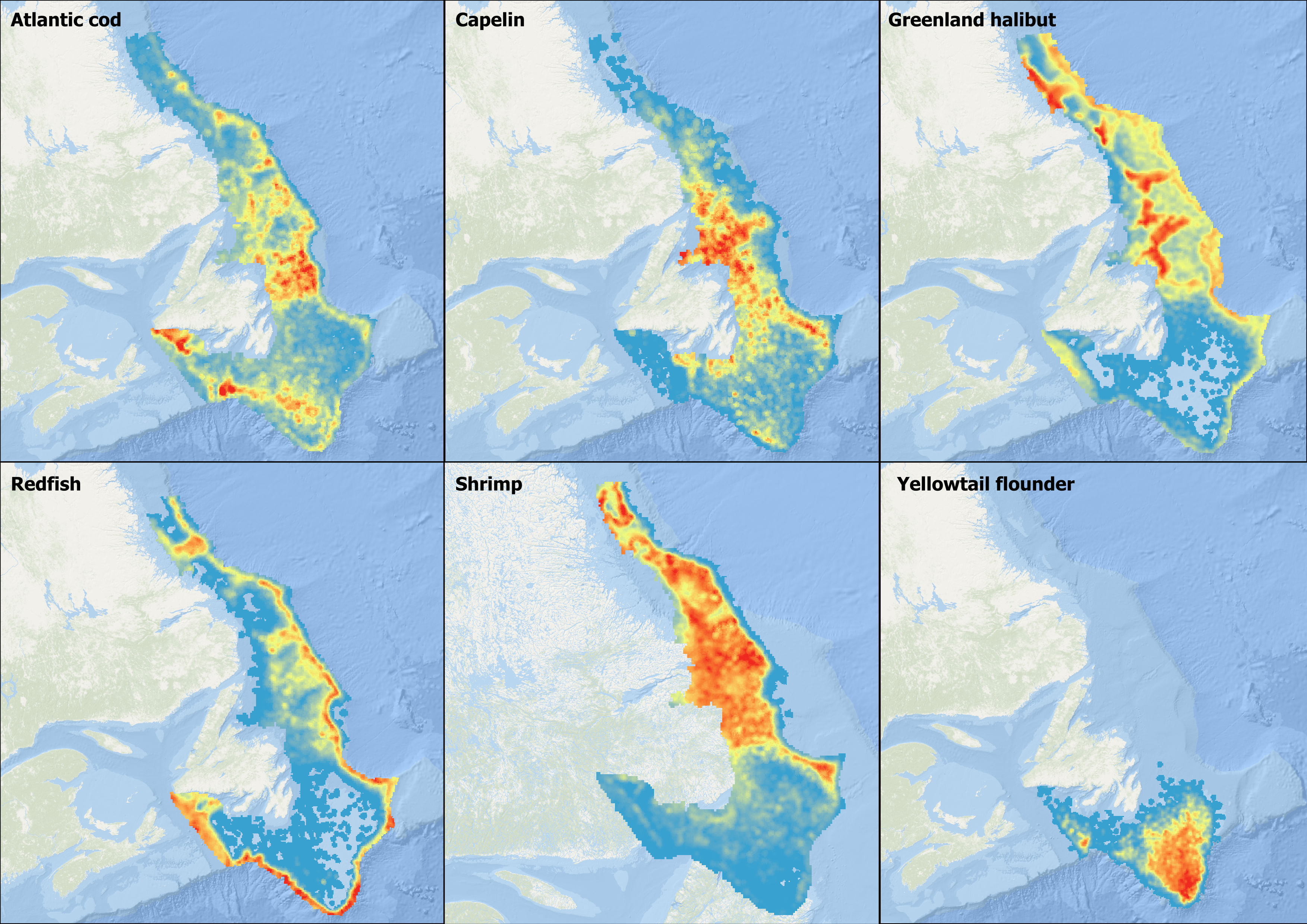
Aggregates of the relative density of various fish species between the years 1995 and 2017 off the coast of Newfoundland:
The distribution of four of the Top 20 most common species in Canada over time, in periods of two years. The changes in biomass over time for each species is shown in the right panel, highlighting the years affected by the 2013 Fisheries Act changes:
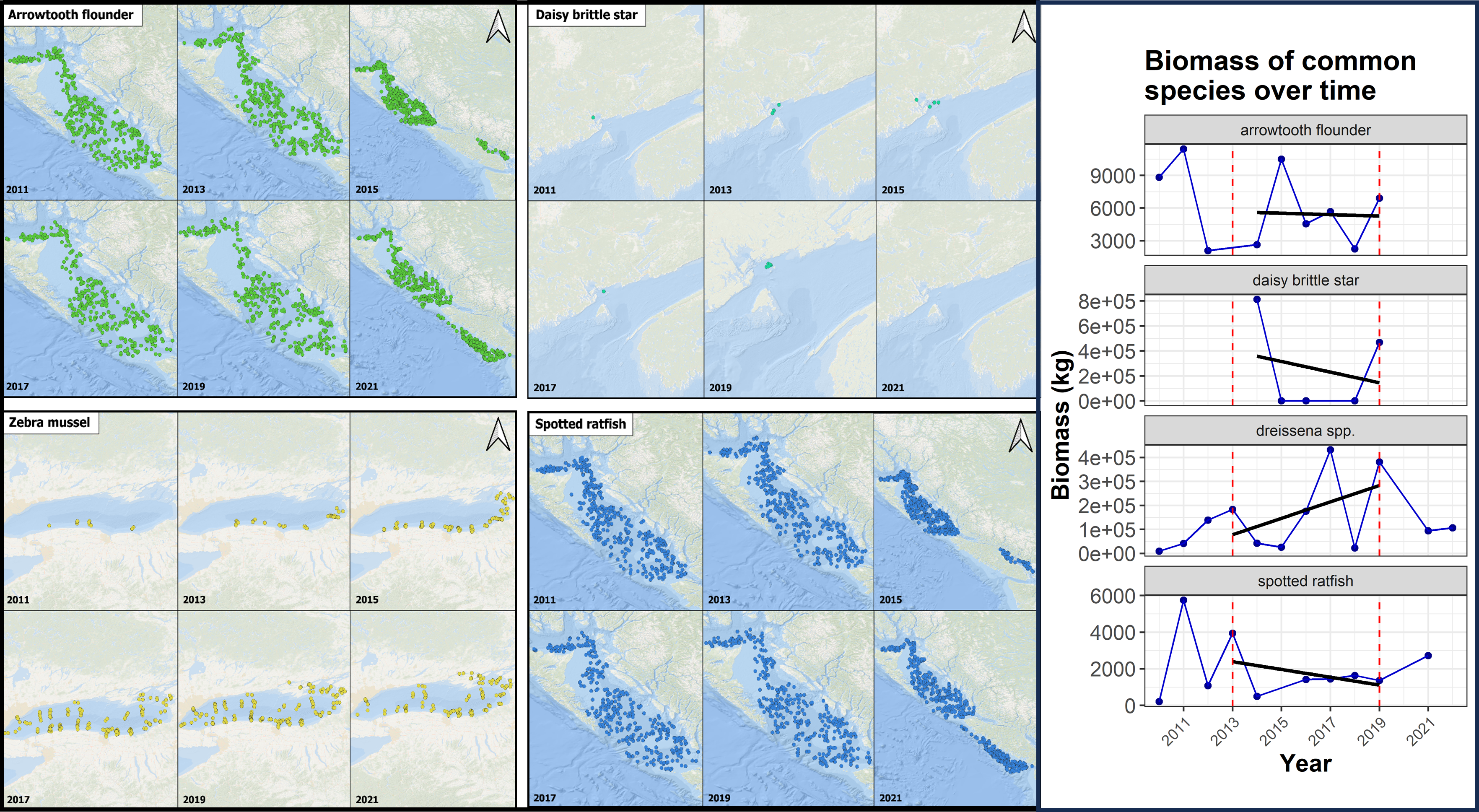 Bonus: check out my R skills on the right :)
ArcGIS
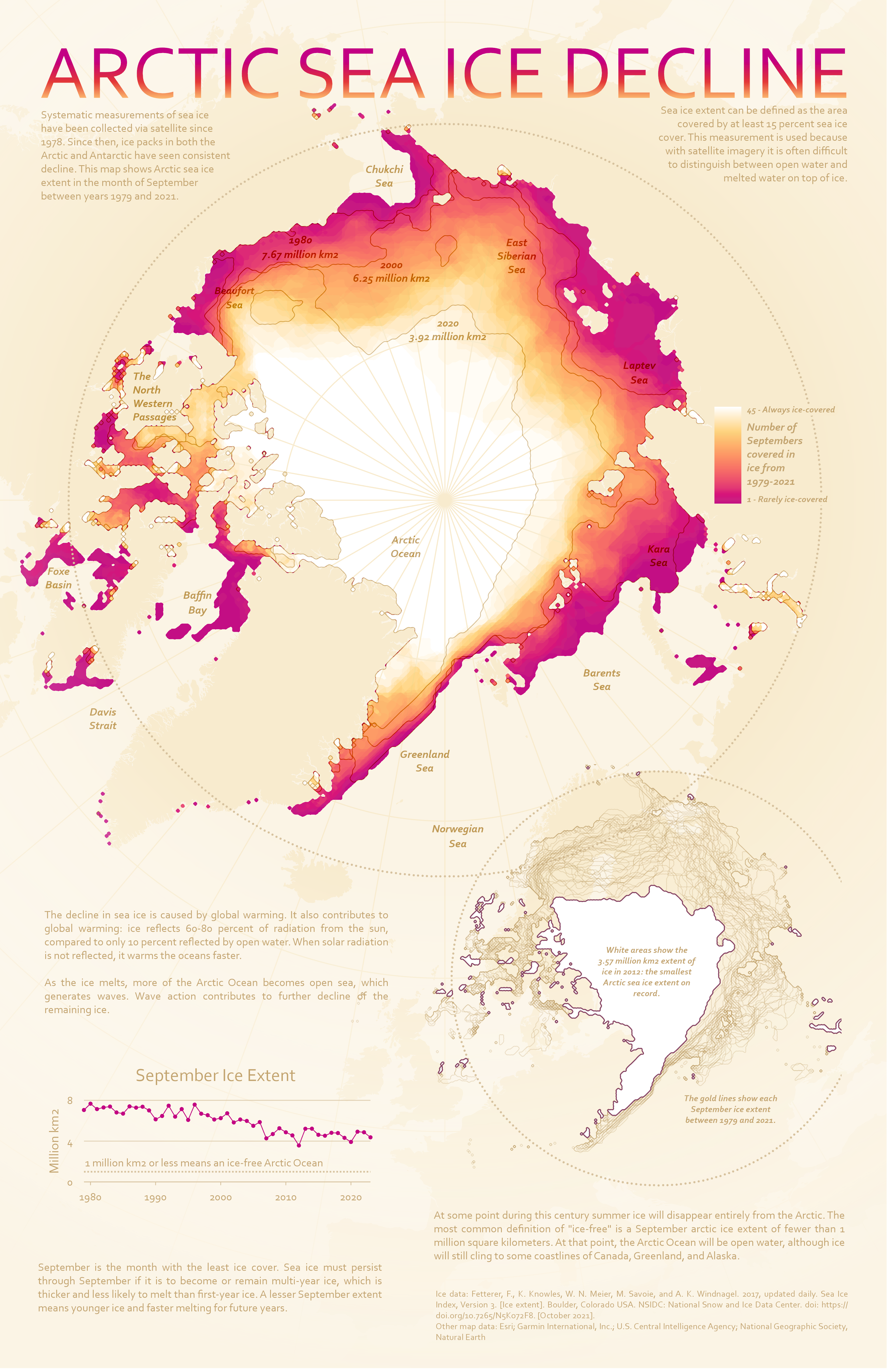
This is a detailed infographic, created using open data, to show the decline of sea ice in the Arctic:
ArcGIS online
Click here to view an interactive StoryMap giving an introduction into wind power and describing a site suitability study for a new wind farm in Colorado. Note: If asked to sign in, just press cancel until it stops asking.
Highlighted Awards and Certifications
- AER Graduate Scholarship in Environment and Sustainability. Based on academic achievement, leadership, and record of engagement in the MES program. Western University, April 2024
- Donna Deaken Graduate Award in Science. Awarded to a graduate student in Science who is pursuing environmental research. Western University, November 2023
- Helen I. Battle Gold Medal and Scholarship. Awarded to the graduating student with the highest standing in their final year of the Honours Biology program. Western University, 2023
- Best Oral Presentation Award (Ecology and Evolution). Ontario Biology Day Conference, March 2023
- Anti-Racism Foundations certification from experts at Western University, EDI Office
- Connecting for Climate Change Action course from Western University, fusing Indigenous and Eurowestern knowledge while motivating climate change action
- Master the Entrepreneur Skillset, Western Entrepreneurship and Ivey Business School